On June 3, 2026, the "Cloud & Digital Intelligence Power 2026 Digital & Intelligent Finance Forum", co-organized by the International Institute of Finance, University of Science and Technology of China (USTC) and Digital China Information Service Co., Ltd., kicked off in Hefei. Centered on the theme AI Empowers · Value Reshaping, the forum gathered over 400 representatives from local governments, universities, academic experts, state-owned commercial banks, joint-stock commercial banks, rural credit unions, city commercial banks and leading tech firms. Centering on industry transformation driven by large AI models, participating guests shared proven practical experience and conducted in-depth discussions on core topics including AI application opportunities and challenges in the financial sector, large-scale deployment of AI agents, formulation of AI financial standards, ontology-enabled financial decision-making, quantum finance applications, and digital-intelligent transformation breakthroughs for banks.
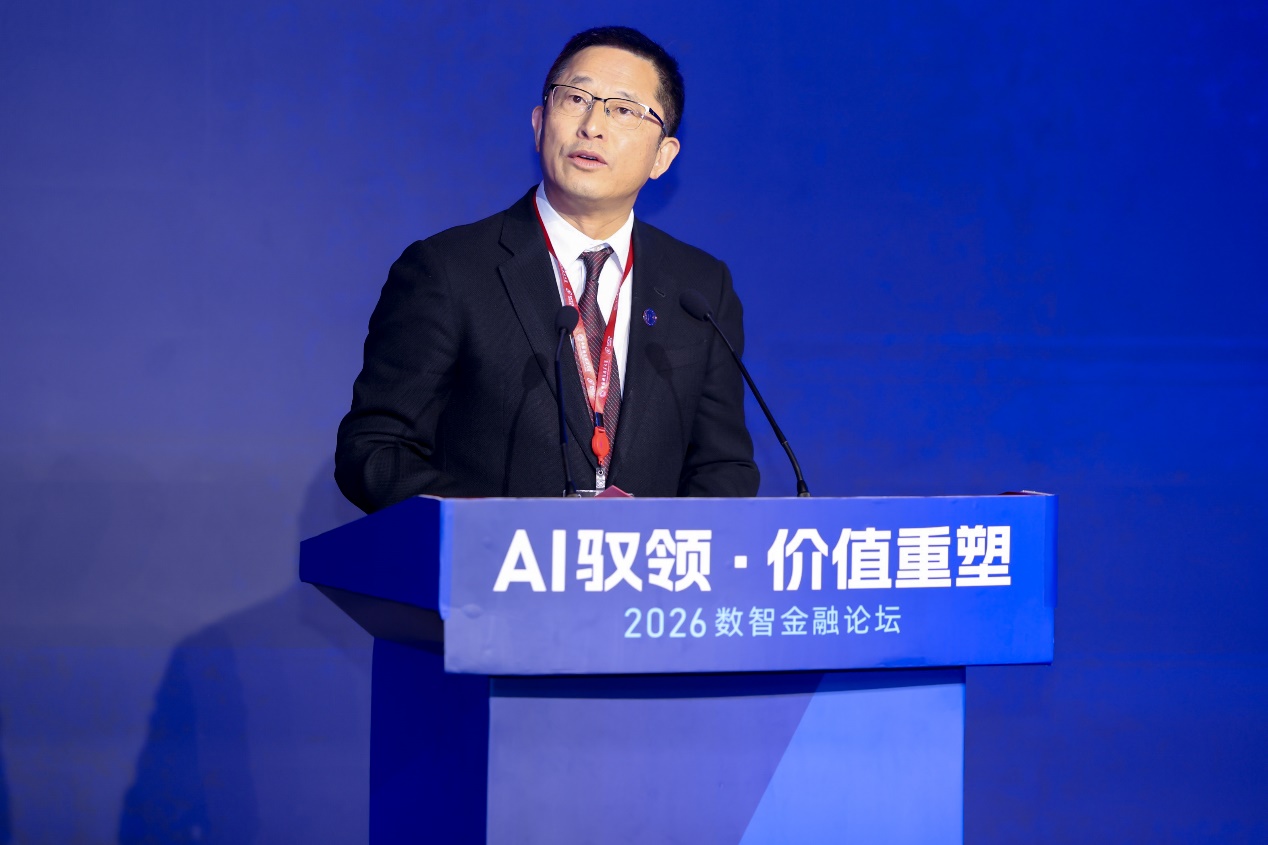
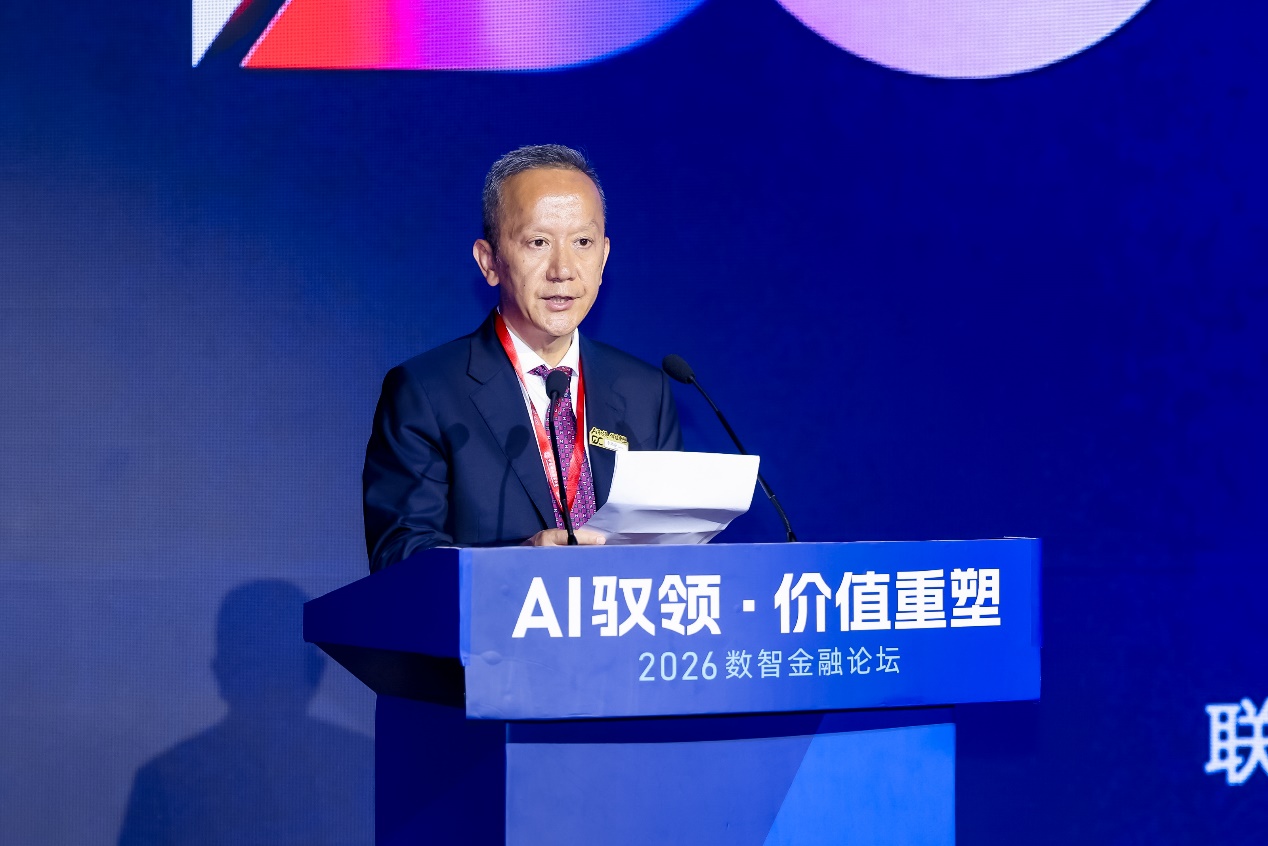
At the opening ceremony, Zhou Congzhao, Deputy Party Secretary of USTC, and Li Hongchun, Co-Chairman of Digital China Information Service Co., Ltd., delivered keynote addresses respectively.
In his speech, Zhou Congzhao stated that relying on their respective strengths in interdisciplinary research and fintech practices, the International Institute of Finance, USTC and Digital China have built a collaborative platform integrating government, industry, university and research, breaking down barriers between cutting-edge technologies, real-world application scenarios and industrial demands.
He put forward an initiative to all industry participants: as key stakeholders linking academia and industry, all sectors should align with national strategies to unlock the value of digital and intelligent finance in serving the real economy; deepen joint research between universities, financial institutions and tech enterprises to translate research outcomes into scalable industrial applications; balance innovation and risk control to jointly build a trusted, controllable digital-intelligent financial ecosystem. Leveraging its disciplinary advantages, the International Institute of Finance, USTC will continue to advance open cooperation, jointly build high-standard innovation platforms, cultivate interdisciplinary financial talents, and contribute insights and expertise to the high-quality development of the financial industry.
Based on the current state of industrial development, Li Hongchun outlined the shift of the financial sector from digitalization to AI-native digital intelligence, and clarified the development path of realizing native business intelligence via AI agent deployment. He elaborated on the company’s future layout from the perspectives of ecological co-construction, scenario implementation and technological research, and expressed expectations for deepening long-term university-industry strategic cooperation with USTC.
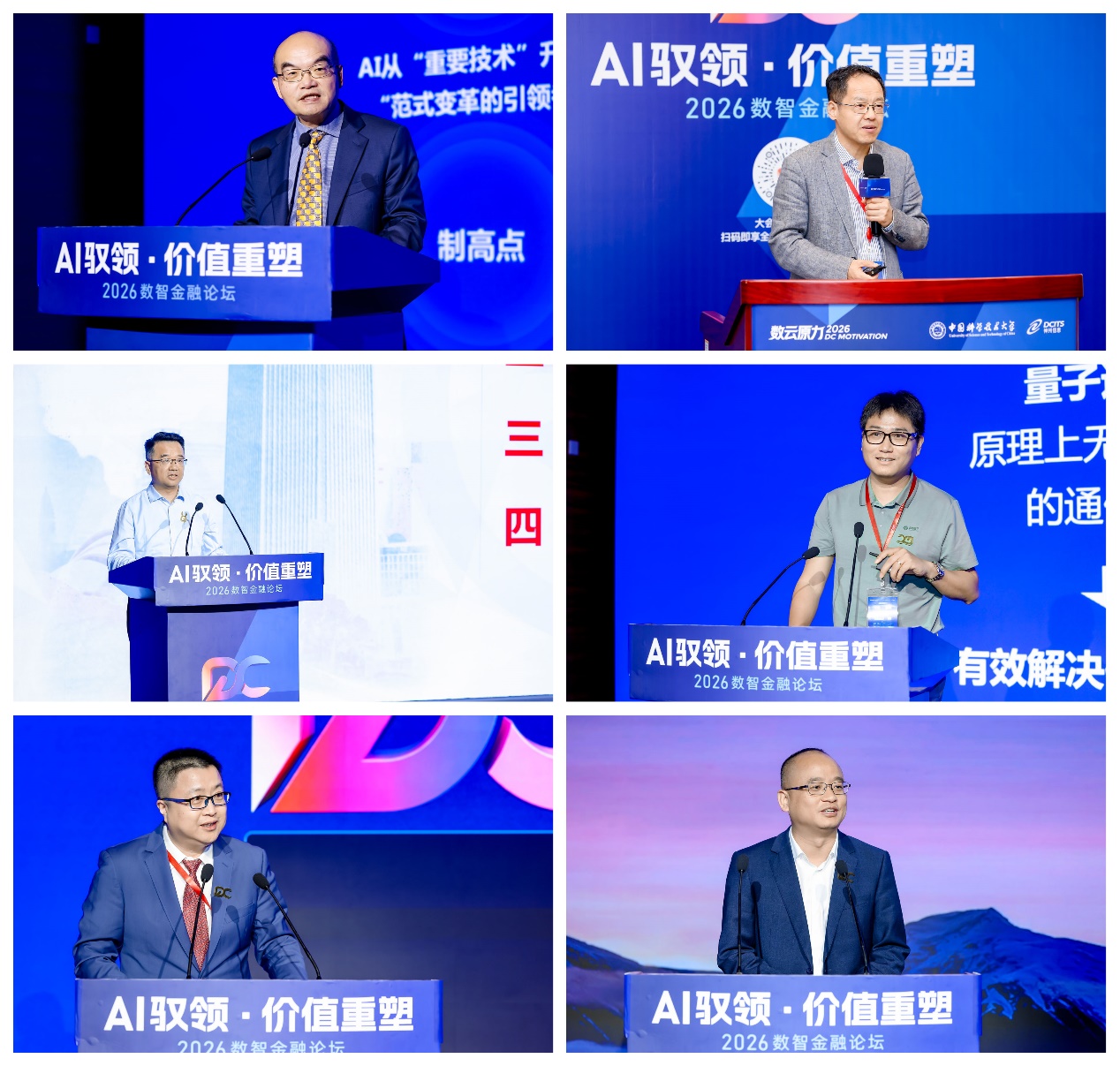
During the keynote speech session, experts from financial institutions and technology enterprises shared cutting-edge insights and strategic judgments on the paradigm shift toward "AI-native finance", offering actionable implementation roadmaps for the digital-intelligent transformation of the financial industry. A lineup of speakers including Lü Zhongtao, Former Chief Technology Officer of Industrial and Commercial Bank of China; Gao Feng, Former Chief Information Officer of China Banking Association and Distinguished Senior Expert of China Financial Media; Wang Yong, Chief Information Officer of Huishang Bank; Wang Zhehui, General Manager of Shanghai QuantumCTek Co., Ltd.; Sun Zhongdong, Chief Consultant for Banking Digital Transformation at Digital China; and Rao Zhengguang, R&D President of Huawei Financial Core Business Group, shared industry practices and feasible solutions from multiple dimensions: enterprise-wide AI system construction, transformation paths for small and medium-sized banks, AI agent-powered banking, integrated innovation of quantum technology and AI, implementation logic of financial ontology, and computing infrastructure development.
In addition, senior representatives from dozens of financial institutions, industrial associations and tech enterprises attended the forum for in-depth exchanges, including the Export-Import Bank of China, ICBC, China Construction Bank, Agricultural Bank of China, Bank of Communications, Postal Savings Bank of China, China Everbright Bank, Minsheng Bank, Industrial Bank, SPDB, Huishang Bank, Hangzhou Bank, Anhui Rural Credit Union, Anhui Digital Fintech Association and Tongshun Co., Ltd. All participants explored new approaches to the digital-intelligent upgrading of the financial sector.
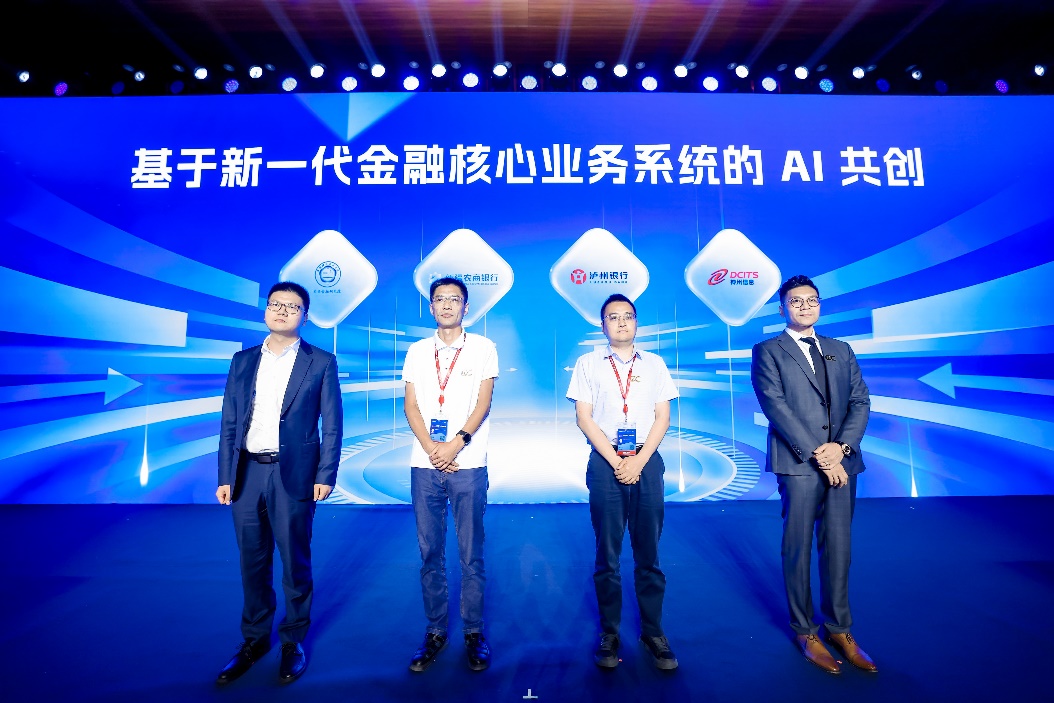
A series of supporting activities were arranged alongside the forum, including the release of joint AI innovation achievements and product solutions, as well as thematic seminars, closed-door roundtables and workshops. At the special achievement launch session, the International Institute of Finance, USTC, together with Digital China, multiple commercial banks and leading ecological tech partners, unveiled a suite of co-developed AI innovations and flagship AI agent products, namely the joint development of a new-generation core AI system, an intelligent assistant for corporate marketing, the first industrial alliance for financial large AI models, alongside a series of products including Financial Skillbase v2.0,Whitepaper on Banking Ontology, Next-Generation Banking Core System and Qiankun Modeling Platform, serving as an industry benchmark for the AI era.
The thematic seminars and closed-door exchanges set segmented agendas categorized by bank types and technology tracks, diving deep into bottlenecks such as digital-intelligent transformation for small and medium-sized banks, architectural upgrading of rural credit unions, quantum finance rollout, and AI risk control governance. The closed-door roundtables adopted a targeted small-group matching model, where banks and tech enterprises negotiated potential cooperation plans on personalized transformation challenges, finalized pilot implementation lists, and translated forward-looking discussions into practical, executable initiatives.