
From August 17 to 19, 2026, the 2026 ABFER‑JFDS Conference on AI for Finance was successfully hosted at the International Institute of Finance, University of Science and Technology of China. Jointly organized by the Cheung Kong Graduate School of Business, HKUST Business School, PBC School of Finance at Tsinghua University, the International Institute of Finance, Faculty of Business for Science and Technology, and School of Management of USTC, the event received academic support from the Asian Bureau of Finance and Economic Research (ABFER) and The Journal of Finance and Data Science (JFDS).
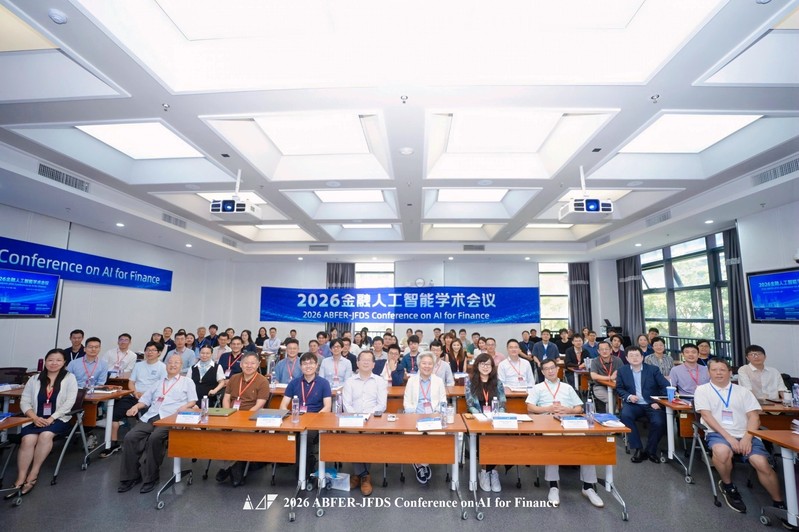
More than 100 experts, scholars and young researchers from over 20 leading global institutions, including the Hong Kong University of Science and Technology, the Chinese University of Hong Kong, Seoul National University, Rutgers University, Boston College, Tsinghua University, Peking University, Zhejiang University, Shanghai Jiao Tong University and Nanjing University, gathered in Hefei. They engaged in in‑depth discussions on AI‑driven theoretical innovation and market practice in finance, as well as the application of AI technologies in asset pricing, portfolio management, corporate finance and financial risk assessment. Participants also explored paradigm shifts in finance brought by large language models and machine learning, and deliberated on future directions for financial academic research powered by artificial intelligence.
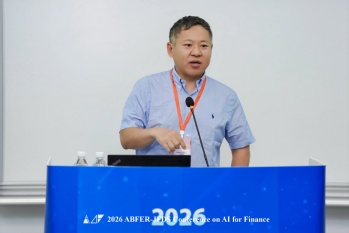
Professor Cao Huining, Conference Chair from the Cheung Kong Graduate School of Business, delivered the opening address and extended a warm welcome to scholars from home and abroad. Quoting the University of Science and Technology of China’s academic ethos of “being both red and expert, integrating theory with practice”, he interpreted the notion of “integration” as the essence of finance. According to Professor Cao, deep integration of finance and technology constitutes the core theme of this conference. Breakthroughs in scientific and technological innovation must go hand‑in‑hand with robust financial support; only through such synergy can theoretical advances and practical innovations be achieved in finance.
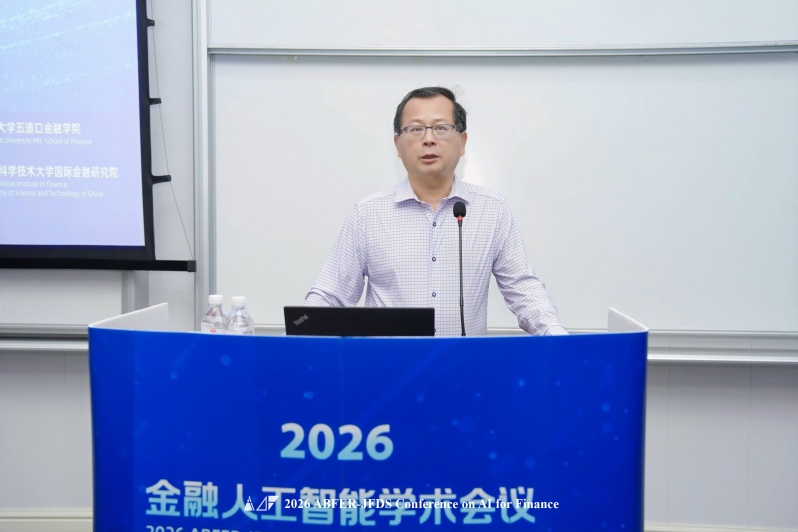
Artificial intelligence opens new avenues for modern financial research, with great potential for processing complex financial datasets, improving research efficiency and building bridges for Sino‑foreign academic dialogue. He stressed that a central theme for joint exploration at this conference is how to leverage AI tools to address real‑world questions in capital markets. Professor Cao encouraged participants to exchange ideas on this high‑caliber academic platform, advance cross‑disciplinary frontiers under the theme of AI for Finance, and pool global academic insights to resolve key scientific challenges in finance. He called for collaborative efforts to identify feasible pathways for AI‑enabled finance development with Chinese characteristics, and contribute to building a localized yet globally connected new paradigm for financial scholarship.
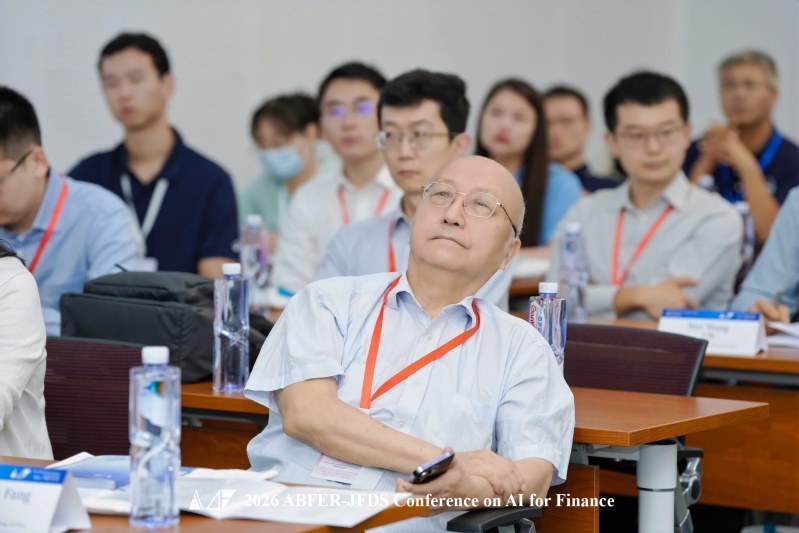
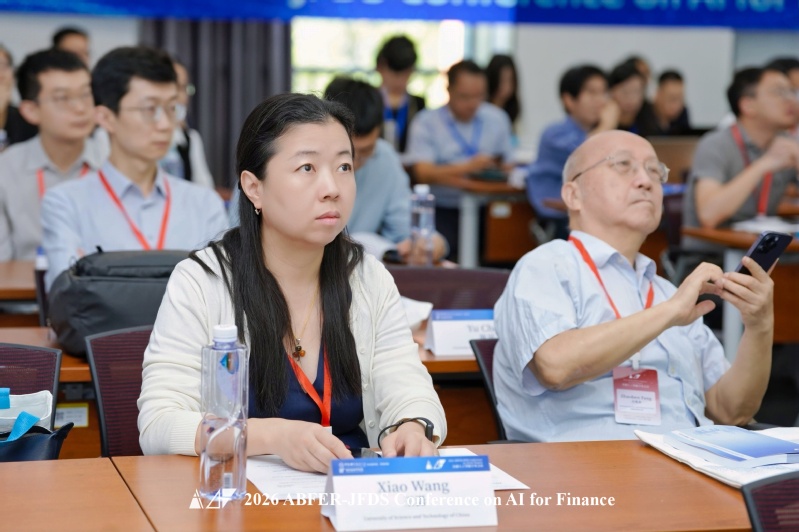
Professors Yao Jiaquan (University of Science and Technology of China), Zhang Qunzi (Shandong University) and Qiu Zhigang (Renmin University of China) served as session moderators. Professor Fang Zhaoben, former Dean of the School of Management at the University of Science and Technology of China and former Vice‑Chairman of Anhui Provincial Committee of the Chinese People’s Political Consultative Conference, along with Professor Wang Xiao, Committee Member of Faculty of Business for Science and Technology and School of Management and Assistant Director of the International Institute of Finance, attended the conference.
Professor Pan Jun from the Shanghai Advanced Institute of Finance, Shanghai Jiao Tong University, gave a keynote speech entitled Pricing the Global Trade Vulnerability. Against the backdrop of profound shifts in the global trade landscape, she conducted an in‑depth analysis of global trade pricing logic and transmission mechanisms within capital markets. Drawing on empirical global market data, she illustrated how trade risks propagate into asset prices and unpacked the inherent impacts of external geopolitical‑economic shocks on capital‑market risk pricing. Combining cutting‑edge international theoretical frameworks with real‑world observations of global markets, her presentation offered fresh perspectives for understanding geopolitical and trade risks and refining risk‑pricing systems. It also delivered valuable insights for scholars researching AI‑empowered risk identification and asset pricing.
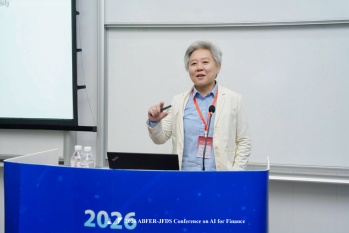
In the invited‑talk sessions, Professor Yu Jianfeng (Tsinghua University), Professor Zheng Xinghua (HKUST), Professor Li Yingying (HKUST) and Professor Jiang Fuwei (Xiamen University) shared their findings covering return predictability, high‑dimensional mean‑variance portfolio optimization, mining latent stock‑risk linkages via financial graph learning, and the practical adoption of generative AI in finance. Centered on cross‑disciplinary integration of artificial intelligence and finance, the four invited presentations combined state‑of‑the‑art econometric models, big‑data empirical evidence and real‑world industry scenarios to interpret transformations brought by new technologies to asset allocation, risk identification and capital‑market research paradigms. Featuring rigorous theoretical deduction as well as reflections grounded in real‑market data, the talks provided diverse research inspirations for faculty and young researchers. Following the presentations, participating scholars held lively Q&A exchanges regarding technical hurdles, practical boundaries of models and future prospects for AI‑finance interdisciplinary research.
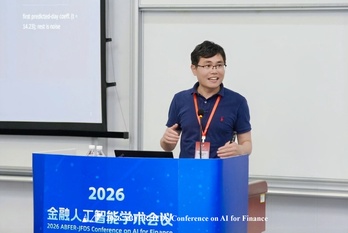
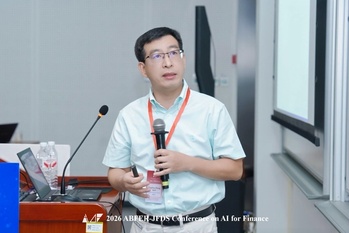
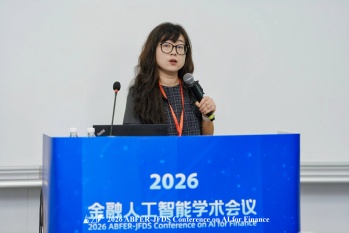
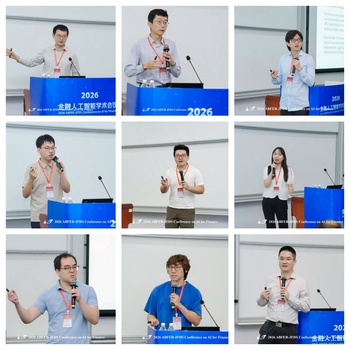
Nine thematic presentations revolved around core topics of AI for Finance, including interpretable systemic risk, AI‑driven corporate M&A decisions, mining investment value from analyst reports, high‑dimensional portfolio optimization, investor behavior in visualized capital markets, large‑language‑model‑driven financial risk premia, large‑model‑assisted discovery of asset‑pricing hypotheses, agency conflicts in AI agents, and data anonymization alongside information loss. These sessions spanned multiple research fields such as behavioral finance, asset pricing, corporate finance and financial big data, creating a robust platform for scholars across sub‑disciplines to present and exchange ideas. Nine discussants delivered professional critiques for each paper, putting forward constructive suggestions on research design, model logic, empirical approaches and potential extensions. The format of paper presentations paired with expert commentary deepened academic deliberations, broadened presenters’ research horizons and enhanced the overall quality of scholarly exchange.
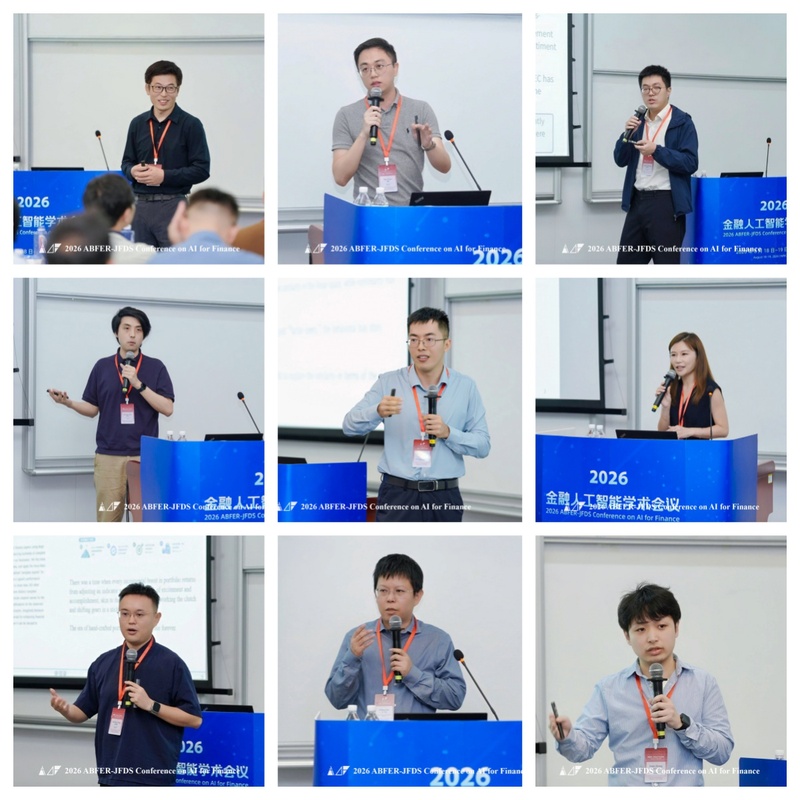
The conference yielded rich academic outcomes. Out of 60 valid submissions, 9 papers were selected through rigorous peer review for presentation. Based on academic novelty, empirical rigor and on‑site presentation performance, the organizing committee selected winners of the Best Paper Award and Best Discussant Award via on‑site voting. The Best Paper Award went to Ke Wu for his paper Anonymization and Information Loss. The Best Discussant Award was granted to Zhang Dake, who demonstrated outstanding academic acumen through his incisive and professional commentary on Anonymization and Information Loss. Sponsored by The Journal of Finance and Data Science (JFDS), these two awards aim to incentivize academic exploration in AI‑enhanced finance, foster a culture of rigorous and thoughtful paper discussion, and promote high‑quality research outputs at the intersection of AI and finance.
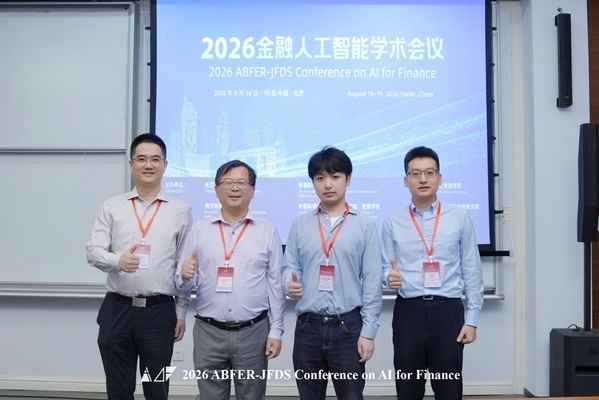
By bringing together leading research forces from global universities, this conference built a high‑level academic dialogue platform for cross‑disciplinary studies bridging artificial intelligence and finance. It created valuable opportunities for scholars worldwide to share cutting‑edge findings, engage in intellectual debates and advance inter‑institutional research collaboration. The event has greatly facilitated the deep integration of new technologies including large language models and machine learning with financial studies, and boosted the development of AI‑enhanced finance as an academic discipline.
Moving forward, the Faculty of Business for Science and Technology, School of Management and International Institute of Finance of the University of Science and Technology of China will keep focusing on frontiers in finance. The institute will regularly host high‑level academic events, pool domestic and international academic resources, advance innovative cross‑disciplinary research on finance and technology, support the cultivation of interdisciplinary researchers, and contribute to building a modern financial academic ecosystem rooted in China and aligned with global standards.
The previous three ABFER‑JFDS conferences were hosted respectively at the Cheung Kong Graduate School of Business, Southern University of Science and Technology and the PBC School of Finance at Tsinghua University. For detailed conference information and agendas, please visit the official website: https://ai4f2026.com/.