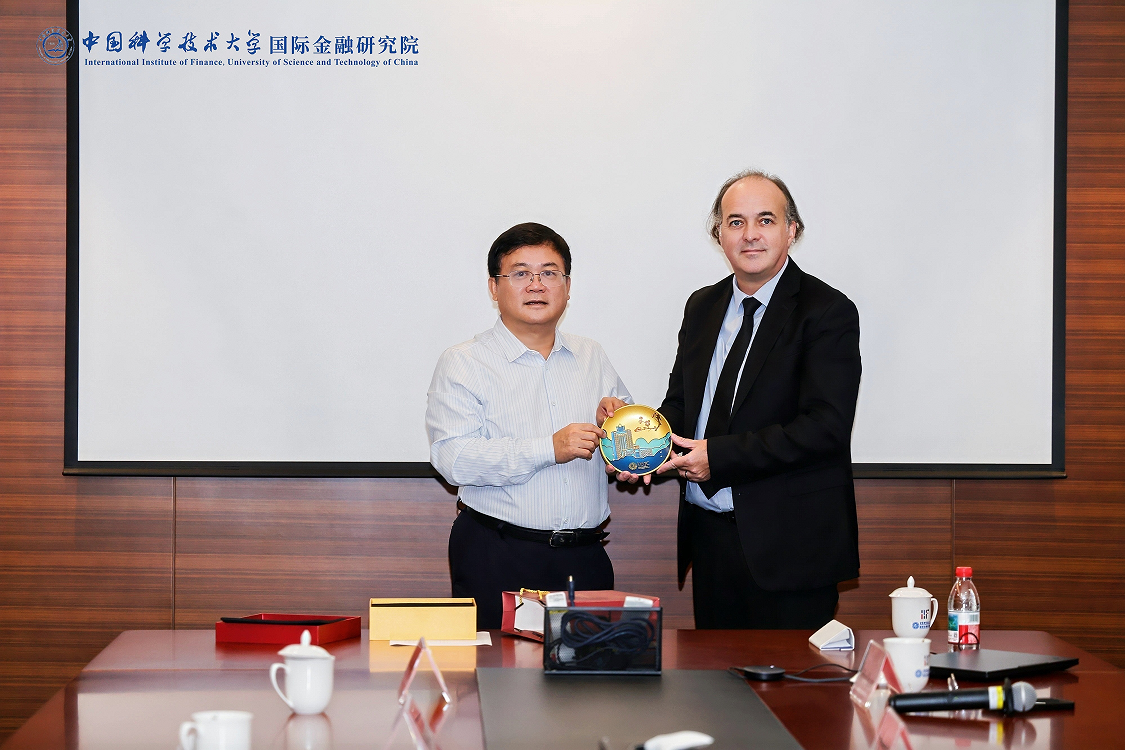
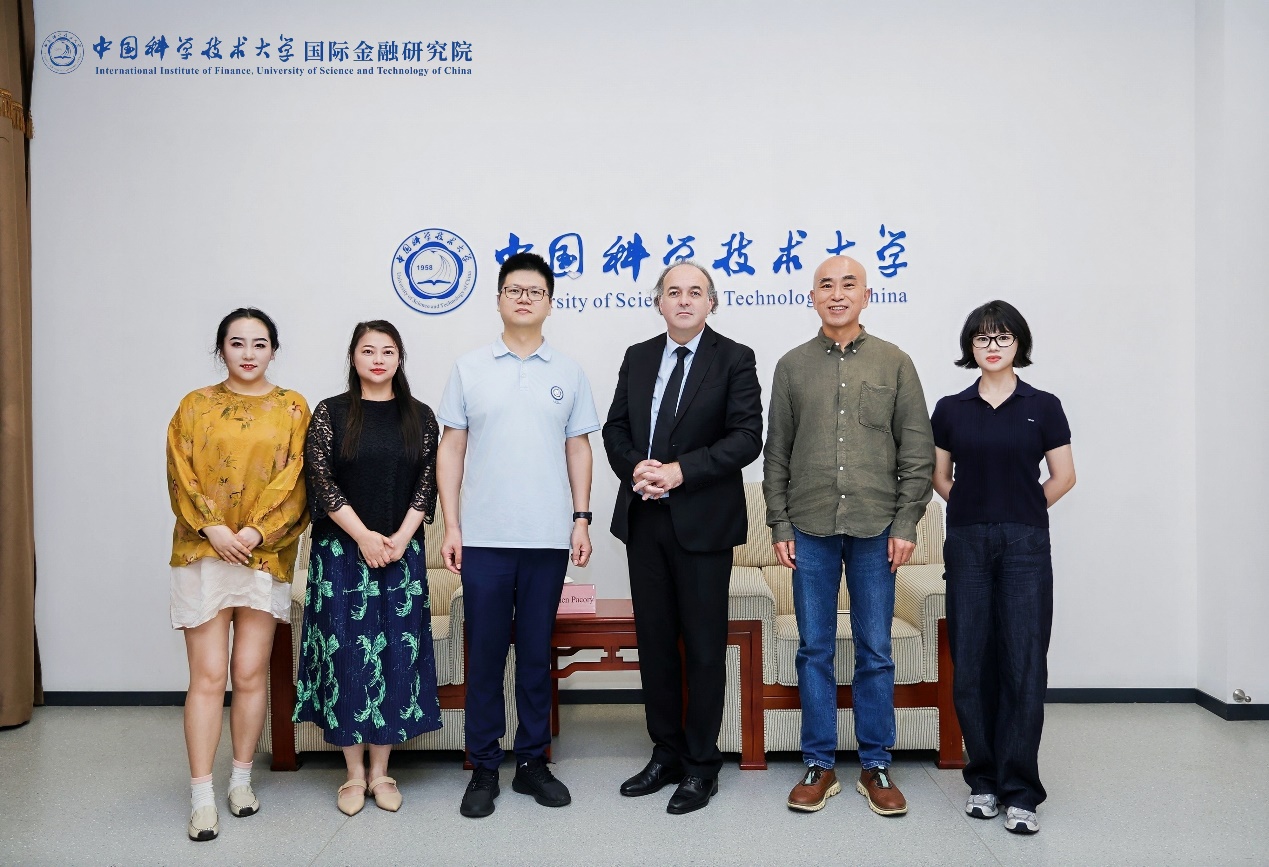
On September 16, the Second Global Science and Technology Innovation Seminar, hosted by the International Institute of Finance (IIF) of the University of Science and Technology of China (USTC), was held in Room 607, Building 5 of the IIF. Under the theme “Opportunities and Challenges for French Companies in China”, the seminar featured Dr. Fabien Pacory, Executive Vice President of the French Chamber of Commerce and Industry in China (CCI France Chine), French Foreign Trade Advisor, official lecturer at ESSEC Business School and visiting lecturer at UCLA Anderson School of Management, as the keynote speaker. The event comprised three segments — a keynote session, an interactive discussion and an in-depth interview — bringing together faculty and students to explore new prospects for China–France trade cooperation and cross-border entrepreneurial practice.
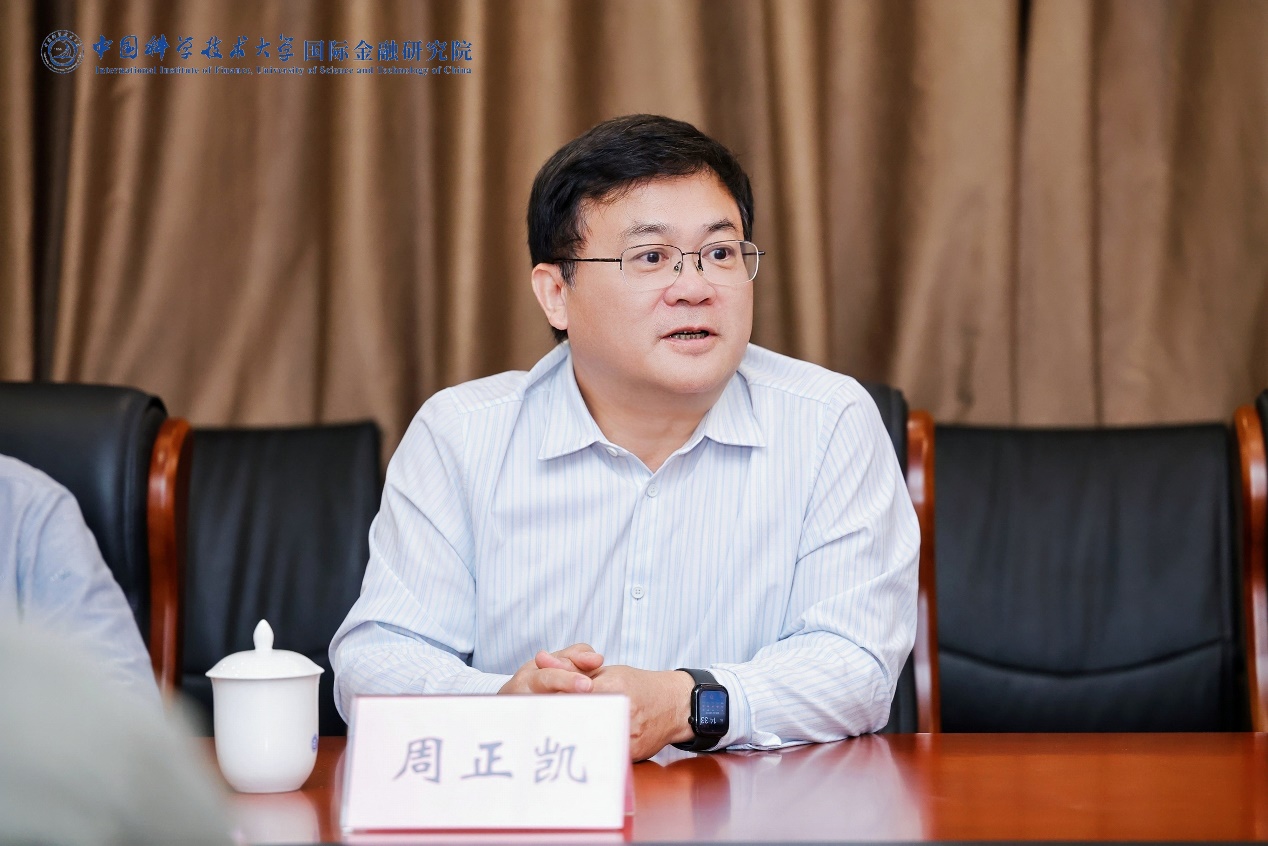
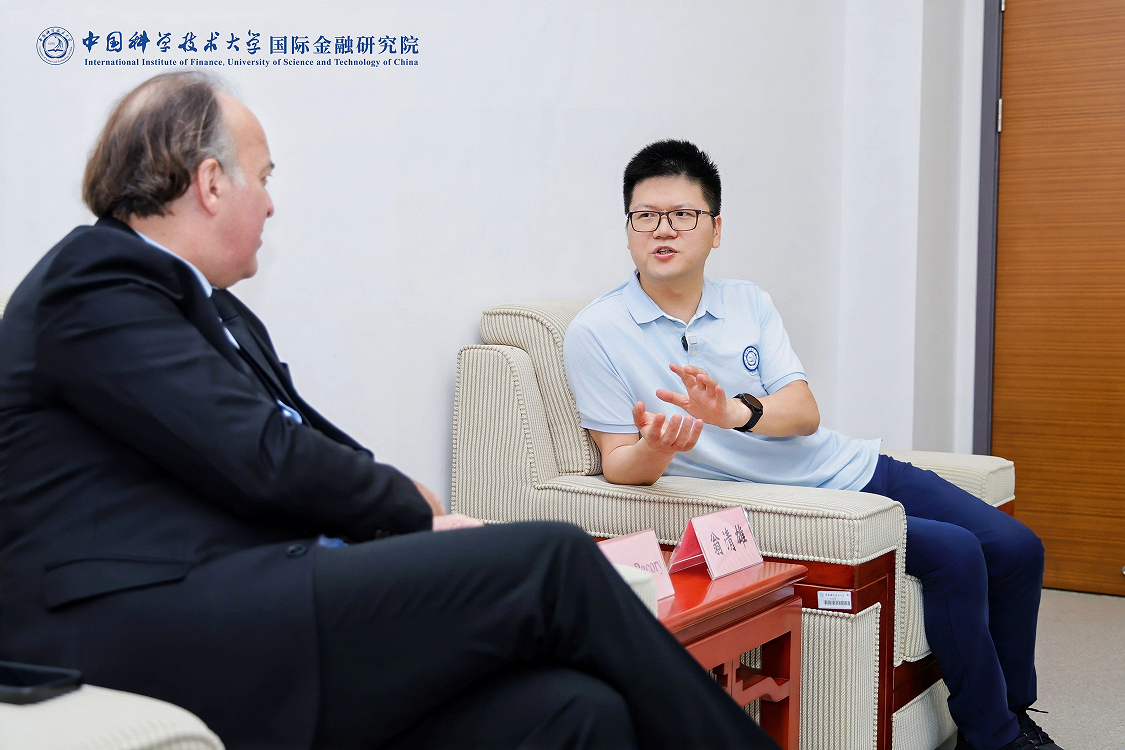
The seminar was moderated by Zhou Zhengkai, Vice Dean of the IIF; Weng Qingxiong, Vice Dean of the IIF, served as the interview guest. Associate Professor Li Xianwei of the Foreign Language Teaching Center at USTC and faculty and students also attended.
In his opening remarks, Vice Dean Zhou welcomed Dr. Pacory and all those present. He explained that the Global Science and Technology Innovation Seminar is a flagship series of innovation events created by the IIF. It aims to build an international platform for industry–academia exchange and to bring frontline industry experience into the classroom, which is of great significance for broadening students’ international outlook and supporting their career development and capacity for innovation and entrepreneurship. He encouraged the young students to make full use of the university’s international resources, to take the initiative to learn about cross-border business practice, and to find their direction and act boldly in career planning and entrepreneurial exploration.
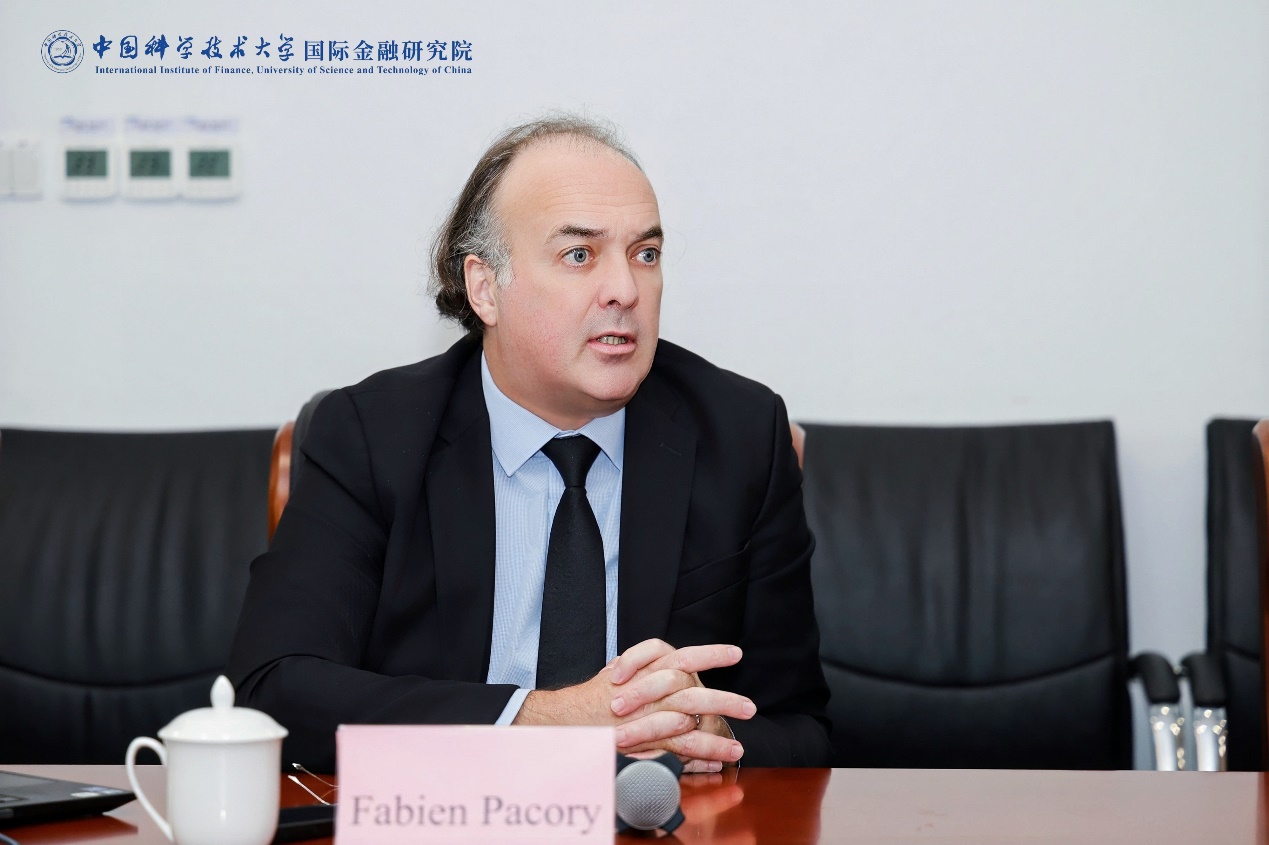
Dr. Pacory has extensive experience in China–France trade facilitation, multinational corporate services and industrial consulting. CCI France Chine, the chamber he serves, was founded in 1992 and is the leading business network for French companies in China. With offices in Beijing, Shanghai, Guangzhou and Shenzhen and more than 1,700 member companies in manufacturing, services, consumer goods distribution, information and communications technology and other sectors, it has long provided French companies with comprehensive support in market development, policy advocacy, talent services and business matchmaking, and has consistently promoted exchanges and cooperation between the Chinese and French business communities.
In the keynote session, drawing on the chamber’s first-hand experience in serving a large number of French companies in China, Dr. Pacory presented a realistic picture of how French companies operate in the Chinese market. He identified the opportunities they now face: China’s vast market, comprehensive industrial and supply chains and continuously improving business environment offer ample space for foreign companies to innovate and establish operations, with green transition, the digital economy, premium consumption and advanced manufacturing among the priority areas for French companies. He also offered an objective analysis of the practical challenges of cross-border operations, including changes in the competitive landscape, localization, talent supply, policy compliance and cross-cultural management. Dr. Pacory suggested that French companies seeking to build a long-term presence in China cannot simply replicate their existing overseas models; they need to pursue deep localization and innovation and align closely with local supply chains, talent and consumer demand. At the same time, China–France business cooperation holds two-way opportunities: beyond French investment in China, Chinese technology companies can also draw on French experience to explore entrepreneurial paths in the European market. In the Q&A session, faculty and students raised questions on the recruitment preferences of French companies, cross-cultural workplace management, differences between Chinese and French entrepreneurship and pathways for young students to pursue careers in France. Dr. Pacory answered each question in turn, and the discussion was lively.
Following the keynote, Vice Dean Weng Qingxiong and Dr. Pacory held an in-depth interview on differences between Chinese and French business cultures, the capabilities multinational companies require of their employees, and how young students can seize the opportunities arising from China–France cooperation. The discussion noted that as China–France trade and economic ties continue to deepen, demand is steadily rising for well-rounded professionals who are bilingual, possess an international outlook and are familiar with the business rules of both countries. Students should therefore build a solid professional foundation, broaden their international understanding and strengthen their cross-cultural communication skills and their ability to address complex business issues.
Grounded in the perspective of international entrepreneurial practice, the Second Global Science and Technology Innovation Seminar served as a bridge between industry and the university community. Through the keynote, the Q&A and the in-depth interview, participants gained a direct understanding of how French companies are developing in China and of both the opportunities and the practical difficulties of cross-border business. The event further broadened students’ international business horizons and offered valuable reference for their future international employment and entrepreneurial ventures. The IIF will continue to invite industry experts from China and abroad to its Global Science and Technology Innovation Seminar series to share cutting-edge practical insights on campus.