
To thoroughly study and implement General Secretary Xi Jinping’s important instructions on the Dual Carbon initiative, and uphold the core positioning of the International Institute of Finance (IIF), University of Science and Technology of China (USTC)—Finance Empowers the Real Economy, Research Serves National Strategies, a delegation led by Professor Wang Xiao, Assistant Dean of IIF, together with Guanghua School of Management, Peking University, carried out a four-day national and social conditions research in Guangzhou and Shenzhen from February 2 to 5, 2026.
Aiming to address core pain points in the carbon sector and explore pathways for green finance development, the research precisely engaged local government agencies, carbon trading platforms and leading industrial enterprises. It explored the practical implementation of the Dual Carbon strategy in an all-round way, promoted the in-depth integration of research practice and academic study, injected practical momentum into IIF’s research in green finance and carbon management, and contributed to the national Dual Carbon strategy.
As a frontier of reform and opening-up, Guangdong became one of China’s first pilot provinces for carbon emissions trading in 2011, with Shenzhen included in the pilot simultaneously, forming a green development pattern of Provincial Coordination, Dual-City Leadership.
Guangzhou, as a South China economic and energy hub, boasts profound experience in carbon trading mechanisms and energy transition. Shenzhen, as a special economic zone in the new era, has pioneered responses to overseas carbon rules and product carbon footprint management, creating a replicable Shenzhen Model.
This research focused on key topics including carbon cost transmission in the power sector, product carbon footprints, corporate carbon accounting, green asset cancellation, and responses to overseas carbon rules, achieving full coverage of policy, market, enterprise and technology.
The delegation first arrived in Guangzhou, visiting carbon trading platforms, provincial state-owned enterprises (SOEs) and tech enterprises to decode the logic of the carbon market and explore paths for industrial transformation and technological breakthroughs.
At the start of the research, the team held a special meeting to systematically review core knowledge of carbon trading, clarify the differences between emission allowances and voluntary emission reduction trading, interpret the current status of the European carbon market and core requirements for voluntary emission reductions, and consolidate theoretical research foundations.
At the Guangzhou Carbon Emissions Exchange (GCEX), the delegation held in-depth discussions with Ms. Xiao (in charge of strategic research and green finance) and Dr. Zhang on carbon trading mechanisms and responses to overseas carbon rules. They learned in detail about GCEX’s operation model and innovative practices of promoting carbon inclusive development through the dual-wheel drive of government functions + market-oriented services.
Key exchanges focused on carbon data accreditation, power grid factor promotion and responses to the EU CBAM. It was noted that eco-environmental system data is more easily recognized overseas, and zero-carbon park construction and direct green power supply are critical to improving carbon traceability. The delegation gained insights into effective pathways for coordinated policy and market responses to overseas carbon rules, and recognized that the sound development of the carbon market requires both top-level design and grassroots implementation to underpin the Dual Carbon strategy.
On the morning of February 3, at the Energy Conservation and Carbon Reduction Company of Guangdong Energy Group, the delegation learned about the provincial SOE’s practices of empowering full-scenario low-carbon transition through a multi-technical units + unified commercial interface model based on its full-industry-chain advantages.
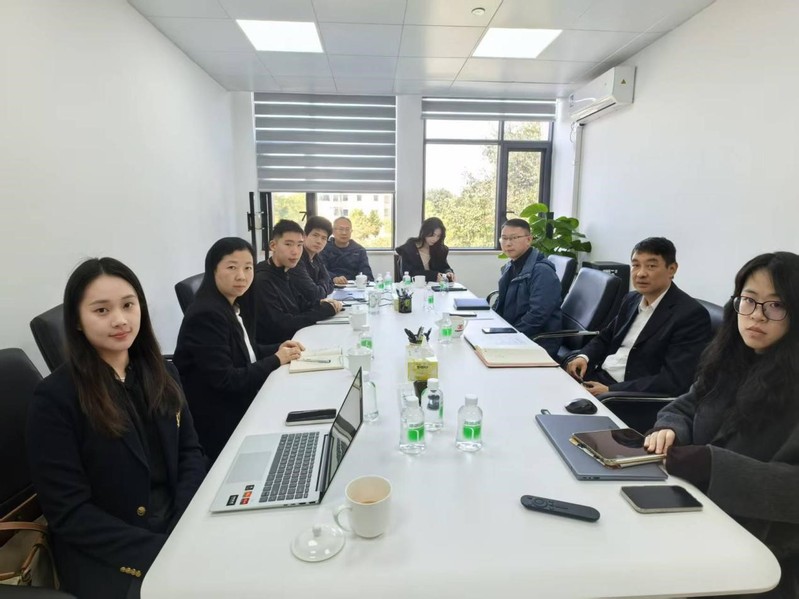
The delegation clarified the responsibilities and strategic priorities of provincial SOEs in the Dual Carbon field, mastered practical methods for full-industry-chain collaborative carbon reduction, and deeply realized that SOEs, as the main force in Dual Carbon transition, must solve practical problems with market-oriented thinking to give full play to their exemplary and leading role.
On the afternoon of February 3, at Guangdong HeyI New Material Research Institute Co., Ltd., a Specialized, Sophisticated, Unique and New Little Giant enterprise, the delegation witnessed the remarkable effects of cutting-edge technology in breaking low-carbon technical bottlenecks and grasped the development path of tech enterprises driving carbon reduction through R&D innovation.
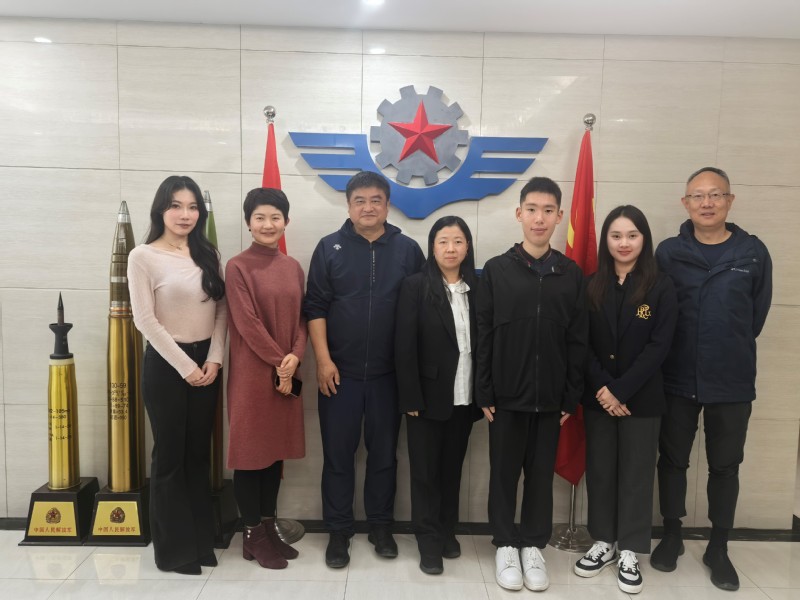
The company focuses on liquid cooling and nano-metal material R&D with sufficient investment, hosts an academician workstation, and masters independently controllable spray liquid cooling technology. Its energy consumption is 30% lower than air cooling, with a cumulative carbon reduction of over 2,400 tons. The delegation fully recognized that technological empowerment and independent technological breakthroughs are the lasting driving forces for green development.
After concluding the Guangzhou research, the delegation headed to Shenzhen, guided by innovation-driven development, to visit leading enterprises and experience the green development vitality of an innovation highland.
On February 4, at Hangjia Chiyuan Co., Ltd., a leading enterprise in the power supply industry, the delegation gained an in-depth understanding of the company’s global market layout under the OEM + ODM + OBM model, its practical low-carbon development path through technological innovations such as photovoltaic power stations and improved energy conversion efficiency, as well as pain points such as difficulties in Scope 3 data statistics.
The delegation deeply understood that manufacturing’s Dual Carbon transition must balance technological innovation and cost control to achieve sustainable development.
On the morning of February 5, at the global headquarters of BYD, the delegation investigated the full-chain carbon management practices of this new energy vehicle leader. It learned in detail about BYD’s global layout targeting full-value-chain carbon neutrality by 2045, including the self-developed i-Di Carbon Chain platform, the release of China’s first new energy vehicle life-cycle carbon footprint report, and strategies formulated in response to the EU CBAM.
The delegation clearly recognized that enterprises’ Dual Carbon transition must be based on the full value chain and enhance green competitiveness through systematic construction to seize opportunities in international competition.
The four-day research in Guangzhou and Shenzhen was compact and fruitful. The delegation visited 5 key entities, and fully grasped the distinctive practices of Dual Carbon implementation and core development pain points of enterprises in the two cities.
Guangzhou drives the transformation and innovation of traditional industries relying on policy coordination and energy advantages, while Shenzhen pioneers overseas compliance and carbon footprint management with innovation vitality, forming a market-oriented and international green ecosystem.
The research accurately captured the distinctive strengths of each entity: institutional innovation at GCEX, SOE responsibility at the Energy Conservation and Carbon Reduction Company, technological breakthroughs at HeyI New Material, industrial green practice at Hangjia Chiyuan, and full-chain layout at BYD. A wealth of first-hand data was collected, providing solid support for subsequent academic research.
It is a vivid manifestation of IIF’s practice of the philosophy of Party-building Leadership, Practical Education, and Research Serving the Country, effectively improving the team’s practical capabilities and professional literacy.
In the future, IIF will deepen research outcomes, focus on key topics such as carbon cost transmission in the power sector and responses to overseas carbon rules, leverage research advantages, and translate achievements into high-quality research reports and policy recommendations to support high-quality low-carbon development in Guangdong.
Meanwhile, IIF will build a research + practice platform, guide faculty and students to conduct in-depth research in green finance and carbon management, promote the integration of academic innovation and the real economy, and lead students to fulfill their original aspirations with professional expertise, contributing wisdom and strength to the national Dual Carbon strategy.